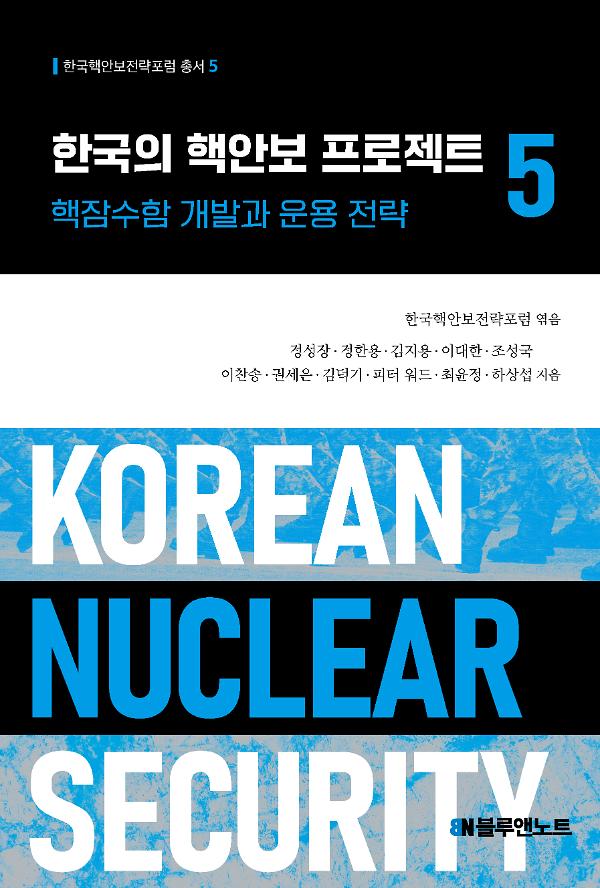
The nuclear threat no longer comes from the sky alone. It is now approaching silently, from beneath the sea. If North Korea deploys a strategic nuclear submarine for operational use, Korea will face a far harder challenge than simply "how do we intercept a launched missile." The question becomes "how do we detect and continuously track a submarine carrying that missile." A Korean nuclear-powered submarine is not a showpiece weapon or a luxury symbol of great-power status. It is a means of survival, one that deters North Korea's underwater nuclear threat, protects Korea's sea lines of communication, and secures the operational space that combined Korea-U.S. forces need in a crisis. The question this book raises is not simply "can Korea build a nuclear submarine." It asks what political decisions and legal and institutional foundations are needed to build one, what trial and error other nuclear submarine powers have gone through, how the challenges of nuclear fuel and reactor-hull integration should be solved, how crew and maintenance personnel should be trained, and what maritime strategy and operational doctrine Korea should adopt once it possesses such a submarine. If North Korea's nuclear submarines aim to threaten Korea's survival from beneath the sea, then Korea's own nuclear submarines must deter that threat from ever becoming reality, from beneath the same sea. A Korean nuclear submarine should not be a luxury built for waging war. It should be a national insurance policy built to prevent a war that would otherwise go unseen.
Co-authored by Seong-Chang Cheong, Chansong Lee, Peter Ward, and Yoon-Jung Choi, et al. | August 14, 2026